TwinGRANTPROCESS
Twin is one workspace for the whole grant process: from the first project opportunity, through the grant application, to the final settlement. Less stress, more control, better results.
From project idea to final settlement.
Twin builds the whole process on one specialism: grants. What we do today is shown in purple; the rest we build out step by step.
You already use AI.
But it was not built for you, and the process around it is still manual work.
At every step between the first project idea and the final settlement, something gets stuck.
- SpotOpportunities spotted too late
- DraftDeadline peaks
- KnowledgeKnowledge in heads
- ReviewNo audit trail
- Award decisionDossier drops out of view
- SettlementReconstruction afterwards
- PositioningBasic work becomes a commodity
- Every stepClient data in chatbots
- Every stepHallucinations
Opportunities come into view too late
Projects start without a funding check, at your firm or at your client. By the time the scheme comes into view, the call has closed or the project is already under way.
A development project at a metalworking company.
Four weeks after closing the question comes up for the first time. By then the project has been running for ten weeks.
Deadline peaks squeeze quality and margin
Everything lands at once: the same deadlines, the same few people. In the peak, evenings and margin are lost, and quality hangs on the last review.
One week from the schedule of a twelve-person consultancy.
Eleven submissions in five days. At this consultancy the final content check runs through two people, and that last round slides into the evening.
The final settlement becomes a reconstruction
Hours, invoices and proof of payment are scattered across the accounts, inboxes and project folders. What was not recorded during delivery, you piece together years later.
A project from three years ago, to be settled this month.
- Purchase quotes, complete, in the project folder
- Timesheets for the first project year, half in the time system, half in a spreadsheet
- Supplier invoices, 3 of 11 recovered
- Proof of payment, with the controller, who left in May
- De minimis declaration, nobody knows whether it was submitted
Three years after the application you are hunting for what nobody had to keep track of back then.
Sound familiar too?
The grant memory lives in people's heads
Successful applications, scheme knowledge and client context are scattered across people and folders, and when a senior leaves, part of that memory leaves with them.
No overview, no audit trail
When a spot check or client review comes, nobody can trace who wrote which version and which sources sat underneath it.
The dossier drops out of view after the award decision
The obligations in the award decision land in a mailbox, and nobody explicitly owns the evidence.
Basic work has become less distinctive
Clients draft the first version themselves with an AI tool, so your value lies in strategy, interpretation and reporting.
Client data in a public chatbot
Project descriptions, financial data and strategic plans disappear into a tool, and nobody quite knows what happens to them there.
Hallucinations that slip through
An invented deadline, a wrong budget, a scheme that does not exist: generic AI does not know what it does not know.
Why Twin and not that chatbot.
Knows the scheme, not just the language
Every scheme has its own structure, terminology and assessment criteria. That is where Twin starts. A generic chatbot writes tidy sentences, but does not know what the assessor scores on.
Control up front, not afterwards
Twin first checks whether the information supplied is complete and asks follow-up questions where it falls short. So you never get fluent prose resting on evidence you never supplied.
Opportunities spotted earlier
You check a project against matching schemes as soon as it starts, while the call is still open and the set-up can still be steered. A chatbot waits until you ask.
One dossier instead of loose chats
Sources, decisions and versions stay together, from the first project idea to the final settlement. Several people work in the same application, and every change is in the audit trail.
Client data stays in the EU
Hetzner cluster in Helsinki, ISO 27001 certified. No US cloud, no transfer outside the EU.
For teams that work with grants professionally.
Small & independent consultancies
Absorb deadline peaks without extra people, know earlier whether a project is worth pursuing, and make your best consultant's approach available to the whole team.
Large consultancies
The same quality standard across teams, margin preserved in peak periods, and firm knowledge that stays in the firm, even when a senior leaves.
Corporates & scale-ups
Pick up project ideas earlier, stakeholder input in one place, and applications that pass the internal audit. ISO 27001, EU-hosted.
Universities & research
Take the load off researchers when applying, with AI use that is explainable to funder and institution, and files that stand up to public accountability.
Where Twin already runs.
Consultancies, in-house teams and research institutions rely on Twin for their applications, from WBSO, the Dutch R&D tax credit, to Horizon Europe.
“Writing is faster, but the real gain comes before that: Twin forces the evidence to be complete before we submit. For every question from the assessor, we have the answer right there.”
Twin in action.
In just four minutes, from uploading sources to a validated submission. Watch the video! The video is in Dutch.
Get in touch with us.
Call us for more information, advice or a trial account. We are happy to help.
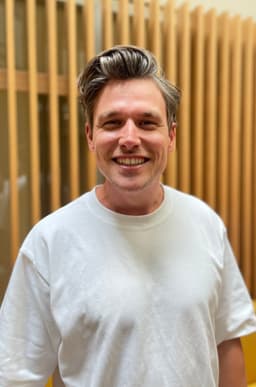
“For me, Twin is not an AI that takes over grant consulting. Twin is the workspace that helps me do my job better, more calmly and with more control. I remain responsible for judgement, strategy and the client relationship. Twin supports me with structure, sources, file context and quality control. I use Twin not because I want to be less of a consultant, but because I want to be an even better one.”
Erwin Seinen
Founder, Nederlands Subsidie Instituut